
Flat Roofing
Flat Roof Installation in Northern Virginia
Four membrane systems. TPO, EPDM, torch down, and two-ply self-adhered. Residential and small commercial. Watertight installations by a family-owned crew.
When To Use Flat Roofing
Flat and Low-Slope Roofing Explained
A true flat roof actually has a slight pitch, typically between a quarter inch and an inch of drop per foot, enough for water to drain toward scuppers or interior drains. Low-slope roofing applies wherever the pitch is less than three inches per foot. Residential porch roofs, commercial buildings, additions, and some modern homes all fall into this category.
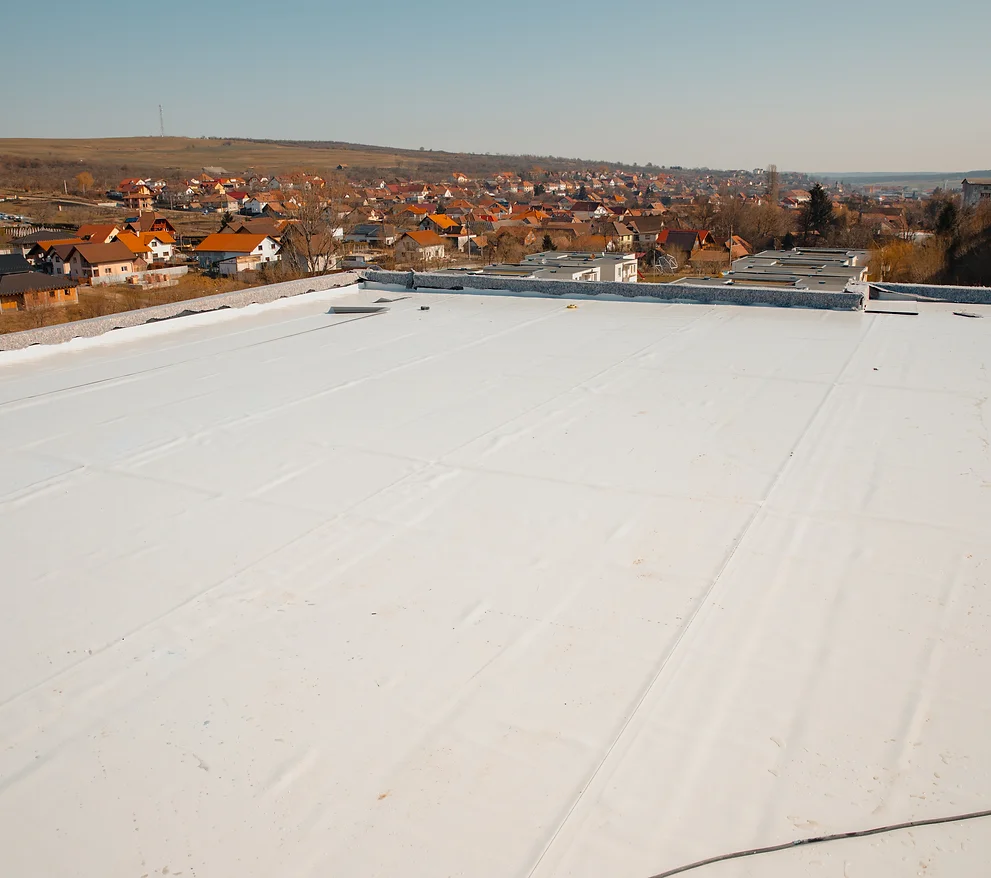
Flat roofing uses single-ply or multi-ply membrane systems rather than shingles. Each membrane has a distinct best-use case. We install four systems and help you pick based on sun exposure, foot traffic, pitch, and budget.
Membrane Options
Four Membrane Systems We Install
Scale
Residential and Small Commercial
Most of our flat-roof work is residential: porch roofs, garage roofs, additions, and modern low-slope homes. We also handle small commercial projects up to roughly 10,000 square feet. The principles are identical at both scales, but commercial work typically requires more attention to penetration detailing, drain integration, and code-compliant insulation assemblies.
For commercial projects we coordinate with property managers on scheduling and can work around business hours when needed. Every flat-roof install includes a written warranty on both the membrane manufacturer's product and our installation workmanship.
The Process
Flat Roof Installation Process
- Tear-off of existing membrane. Full removal down to the decking or insulation board, depending on the system below.
- Inspection of substrate. Rotted plywood or saturated insulation gets replaced before anything new goes on.
- Insulation and cover board. Polyiso insulation with a cover board on top provides a solid surface for the membrane and meets current code.
- Membrane installation. Rolled out, mechanically fastened or fully adhered depending on the system, with heat-welded or peel-and-stick seams.
- Flashing details. Termination bars at parapets and walls, new flashing around penetrations, and proper drain boots on internal drains.
- Water test. We verify the system holds water before we call the job complete.
Flat Roof FAQ
It depends on the membrane. EPDM typically lasts 20 to 30 years, TPO 20 to 25, two-ply self-adhered 20 to 25, and torch-down 15 to 20. Actual lifespan depends heavily on sun exposure, foot traffic, and whether the roof was properly drained from the start.
Most single-seam or small-area failures are repairable. We patch with matching membrane, heat-welded or adhered depending on the system. If multiple seams are failing, the membrane itself is chalky from UV breakdown, or standing water has been pooling for years, it is usually time for a full replacement.
For most residential applications we recommend two-ply self-adhered modified bitumen. It is durable, installs without open flame (safer for homes), and provides redundant waterproofing. If energy efficiency is the priority or the roof is visible from upper windows, TPO's white reflective surface can make sense instead.
Poorly installed flat roofs leak more than sloped roofs. Properly installed flat roofs with positive drainage and correct flashing detailing perform very well for decades. The difference is that on a flat roof every detail matters. There is no margin for sloppy penetration work the way there is on a 6/12 pitch shingle roof.
Small residential flat-roof jobs (a porch roof, a garage, a 400 square-foot addition) run roughly $3,000 to $8,000. Larger residential flat roofs or small commercial projects are priced per square foot based on membrane, insulation, and detailing. Every job is quoted in writing before work starts.
Need a Flat Roof Estimate?
Residential porch, addition, or commercial project. We handle them all with the same disciplined process.